Build days and builder communities: how to join, host and grow one (Southeast Asia guide)
· buildtolaunch
This guide is for two kinds of readers: students in Southeast Asia who are tired of learning alone and want people who actually build, and student organizers who were asked to "run something" this semester with no big budget. You get the formats, a light recipe for hosting each one, and a plan for keeping the group alive after the event.
Short answer
A builder community is a group of people who make things together, such as apps, tools or small products, and show their work to each other regularly. You can take part in three ways: join an online community, show up to a build day, or host one yourself. The one rule that makes all of them work: everyone leaves having shipped or shown something, not just listened.
What makes a builder community different
Most student tech groups are built around listening: a speaker, a slide deck, a Q&A, then photos. A builder community flips that. The main activity is making, and talking is a small part of the day.
Three things set it apart:
- Making over listening. People spend most of the session building their own thing, not watching someone else present.
- Showing work. Everyone shows what they made, even if it is rough. A link someone else can open counts. A screenshot of a plan does not.
- Small, regular rituals. A weekly co-working session, a weekly launch board, a monthly build day. Repetition is what turns strangers into a group.
How it differs from the formats you already know:
| Tech club | Hackathon | Builder community | |
|---|---|---|---|
| Main activity | Talks, workshops | One intense event | Building, repeated |
| Typical rhythm | Per semester | Once or twice a year | Weekly or monthly |
| Who it suits | Anyone curious | People ready to commit a weekend | Anyone who wants to make something |
| What lasts afterwards | Memories, contacts | A project (sometimes) | A habit and a group |
Since AI and vibe coding tools write most of the code for small products, you do not need to be a programmer to be a builder. Marketing, law, design and education students ship working apps too. If that is new to you, start with how to learn vibe coding for free.
Find and join one
Where to look, from easiest to hardest:
- Online communities. You can join today, from any city, and see what members are building. The trade-off is that it is easy to lurk. See online builder communities compared and the best vibe coding communities for beginners and students.
- Campus clubs. A tech, entrepreneurship or design club in your own university. Quality varies a lot, so check what they did last semester, not what they promise. If your campus has none, starting one is easier than it sounds.
- City events. Build days, co-working sessions and meetups. Many are announced on Luma or in Facebook groups; see Luma vs Facebook Events for how to use each. For Saigon, start with vibe coding events in Ho Chi Minh City. For Hanoi, see free AI events for students in Hanoi and co-working for builders in Hanoi (both in Vietnamese). For a wider list in Vietnamese, there is Sự kiện công nghệ, AI cho sinh viên TP.HCM. The buildtolaunch Events page collects upcoming ones.
- Programs. Fixed-length programs with a start and end date. Useful when you need structure. If your cohort program closed, see Buildspace alternatives.
What to look for in any of them:
- Do members show work? Look for recent launches, demos or posts, not just announcements.
- Is it free and open? You should not need an application or a fee to start.
- Is there a rhythm? Something that happens weekly or monthly, not once.
- Will people help you when you are stuck? Read a few threads and see how newcomers are treated.
- Is it okay not to code? If you are not a programmer, check that non-coders are welcome.
Event formats compared
Not every event should be a hackathon. Pick the format that matches your goal, your budget and how much coding your people can do.
| Format | Length | Needs coding? | Judges? | Best for |
|---|---|---|---|---|
| Hackathon | 24 to 48 hours | Often | Usually | Teams who want a challenge and a prize |
| Vibe-a-thon (one-afternoon build day) | About 5 hours | No | No, members vote | Beginners shipping a first app |
| Co-working session | 3 to 5 hours | No | No | Regular momentum, any skill level |
| Themed build day | An afternoon or a day | No | Optional | Giving a specific audience a small, concrete project |
| Demo day | 1 to 2 hours | No | Sometimes | Showing finished work to an audience |
| Online build sprint | A week to a month | Some | Sometimes | Spread-out members, different cities |
Rule of thumb: if you have never hosted anything, begin with a co-working session. It needs a room, Wi-Fi and a clear end-of-day show-and-tell. If you want a bigger moment, host a vibe-a-thon. Save the hackathon for when you have a base of members who already build. More on each: how to run a demo day, hosting an online build sprint across Southeast Asia, and 25 meetup ideas for university tech clubs.
Host a build day
A build day is a short event, often one afternoon, where everyone builds something and shows it at the end. Here are three formats buildtolaunch and its partners have actually run, each with a light recipe that needs no judges and no talks.
The one-afternoon vibe-a-thon
At Vibe-a-thon Saigon on Sunday 27 September 2026, people with no coding background shipped working apps in one afternoon at WORK X in Saigon. The event was free, with registration approval, and ran with partners UpYouth, Base44, WORK X and Sáng Sao. The full story is in the Vibe-a-thon Saigon recap.
The recipe:
- Start from apps people already use. The event had four tracks, each starting from a real-life situation rather than "build anything". A prompt like "make something for your closest friends" gets further than a blank page.
- Use one tool. Everyone built with Base44, which supplied build credits. One tool means one set of instructions, and a mentor can help anyone.
- Define "shipped" as a link someone can open. Not a demo video, not a slide. A live link.
- Vote instead of judging. Builders posted their projects to the Launch League board, tried each other's apps and voted. No judging panel to recruit, and everyone had to try at least a few other apps.
- Keep the clock tight. The event ran from 1:30 to 6:30 PM. A split that works for a five-hour afternoon (our suggestion): about an hour to set up and pick a track, three hours to build, and an hour to launch, try each other's apps and vote.
Full step-by-step: run your own vibe-a-thon.
The co-working session
BuildStuff is a co-working format started by Ky Nam, with a rotating host for each session. buildtolaunch is a partner community, and members have co-hosted sessions. The idea is in the title of the essay: no talks, just building. The rules are simple: no conference-style talks, everyone works on their own project, and at the end people share results.
The loop has three parts: build (make progress on your own project), iterate (get quick feedback and fix the biggest problem) and distribute (show it to people who could use it). The session ends with a short demo from everyone who is willing.
Why it works for hosts: you need a room, a power strip per table, Wi-Fi and a timer. There is no speaker to book and nothing to rehearse. Details in BuildStuff: builder co-working sessions in Saigon and the 'no talks, just building' format.
A themed build day
On 20 October 2026, Vietnamese Women's Day, buildtolaunch ran an online build day with starter prompts and a small, gift-sized project: a bouquet maker you can personalise and send. The prompts are still open at the women's board on Launch League, so anyone can build one on any day.
Why a theme helps: a small, specific project removes the blank-page problem, and a clear audience ("someone you care about") makes the result easy to finish and share. Lessons and a recipe: how to run a women's build day.
Checklist and timeline
For an afternoon event with 30 to 80 people, plan backwards from the day:
| When | What to do |
|---|---|
| 6 weeks out | Pick the format and date. Find a venue. Write your one-line goal: "everyone leaves with a live link". |
| 5 weeks out | Choose the one tool. Ask the tool's team about build credits. Write a code of conduct (template). |
| 4 weeks out | Open registration. On Luma you can turn on approval and set a capacity and waitlist, which helps if the room is small. |
| 3 weeks out | Recruit 3 to 5 helpers: a host, a floor mentor, a registration person, a photographer. |
| 2 weeks out | Test the tool yourself. Build one example app in 90 minutes so you know what is realistic. |
| 1 week out | Remind registered people to bring a laptop and a charger and to sign up for the tool beforehand. |
| Day before | Walk the venue. Test the projector, Wi-Fi and the launch board. |
| Event day | Run the schedule. Keep announcements under five minutes. |
| Day after | Post the recap and the launch links. Thank partners. Invite people to the next session. |
More detail: how to host a student hackathon or build day, a judging rubric template for when you do want judges, how to get sponsors and tool credits, how companies can sponsor a student hackathon in Vietnam and an event recap template.
Start and grow a student community from 0 to 1
If you want a community and not just one event, think in three stages. This is the playbook from buildtolaunch's essay on community building from 0 to 1, adapted from research notes by Anh Thư at UpYouth.
- Discovery. Talk to potential members before you build anything. Ask what they want to make and what stops them. Listen more than you pitch.
- Building. Invite a handful of founding members who share your values and have the time to show up. A small "pre-party" before the official start helps: the founding group meets, tries the format and shapes it together.
- Growth. Run one simple activity, such as a weekly co-working session, at least five times, until people come back without being reminded. Then hand out roles: event organizer, moderator, mentor. A community that depends on one person stops when that person gets busy.
Practical tips for the first month:
- Keep the first activity small and repeatable. Five people who show up weekly beat fifty who show up once.
- Write down your rules before the first session. A short code of conduct protects people and sets the tone.
- Ask every attendee to show one thing at the end, even a half-finished one.
- Do not chase growth numbers early. Chase the return rate: how many people come to a second session.
For campus-specific steps, read how to start a tech or builder club at your university. In Vietnamese: Xây dựng cộng đồng từ 0 đến 1 and Chương trình build/khởi nghiệp cho trường đại học và CLB sinh viên. If you run a university program rather than a club, see running a student builder program. There is also a guide to starting a buildtolaunch chapter at your university.
After the event: keep people building
Most events die the next morning. The people who had a great afternoon go back to class and never open the project again. To keep them building:
- Give each team a place to continue. On buildtolaunch, builders work in project Spaces with a small team, a weekly focus and an AI teammate that can take tasks on the board.
- Set a weekly deadline. The Launch League is a public board where members post launches. It resets every Monday, so there is always a fresh, small deadline.
- Schedule the next session before the first ends. Put the date on the last slide.
- Send a recap within 48 hours with links to everything people made. Seeing your project listed is a reason to come back.
- Ask people what they will do this week. One line in a group chat is enough.
Reading list for hosts: after the event, measuring whether your build day worked.
Measure whether it worked
Attendance on the day is a vanity number. A better set:
| Measure | Why it matters |
|---|---|
| Return rate (came to a second session) | Shows whether it was worth coming back |
| Projects shipped (live links) | Shows people made something real |
| Launches posted after the event | Shows people kept going |
| New people who helped others | Shows the group is becoming self-sustaining |
Count these every month, write them in your recap, and use them to decide what to change. More in community metrics that matter.
Common mistakes to avoid
- Booking speakers first. Talks eat the time people came to build. If you want a guest, give them five minutes.
- Too many tools. Three build tools means three sets of bugs and a helper who knows none of them well.
- No definition of done. "Build something" produces half-finished tabs. "Post a link by 6 PM" produces launches.
- Judging panels you cannot staff. If you cannot find three fair judges, let participants vote, as at Vibe-a-thon Saigon.
- No follow-up. If the recap and the next date are not out within two days, most of the energy is gone.
How buildtolaunch fits in
buildtolaunch is a free community for university students across Southeast Asia, open to any major, with no coding needed to start and no paid tier. It has 70+ free courses in one library, an AI tutor for practice, project Spaces with an AI teammate, the weekly Launch League board and a list of student opportunities. About 300 people are in the community. If you are joining, create a free account and post a first launch. If you are hosting, check upcoming events and opportunities for ideas to link your participants to.
Real builds from Vibe-a-thon Saigon
On Sunday 27 September 2026 (1:30 to 6:30 PM), at WORK X in Saigon, Vibe-a-thon attendees had one afternoon to turn an idea into a live app. No coding was required and there were no judges: everyone posted their project as a Launch, tried each other's apps and voted on the Launch League board. Each track had one winner, plus an award for the most unhinged idea.
| App | Builder | Track | What it does |
|---|---|---|---|
| Segue | Nimit | Daily listening | You pick the songs and a set shape; Segue plans the whole set and mixes it beat matched, in key, on the phrase |
| SayStrike | Bernie | Learning a language | Say each word right to land an attack on TED-REX, a monster that feeds on mispronounced past tense verbs |
| GatherGO | Thanh Huynh Dieu | Sharing with your closest people | Find spots worth going to, let the crew vote, then lock a plan with a time and the people coming |
| Smile Andy | Teddy Bui | Build your own | Reads your face through the webcam, offers to cheer you up out loud when you frown, and is built to save nothing |
| YellowMiso | Choi Byeongmin | Most unhinged idea | Look at your Mac and it unlocks, using the plain webcam and built to run on the device itself |
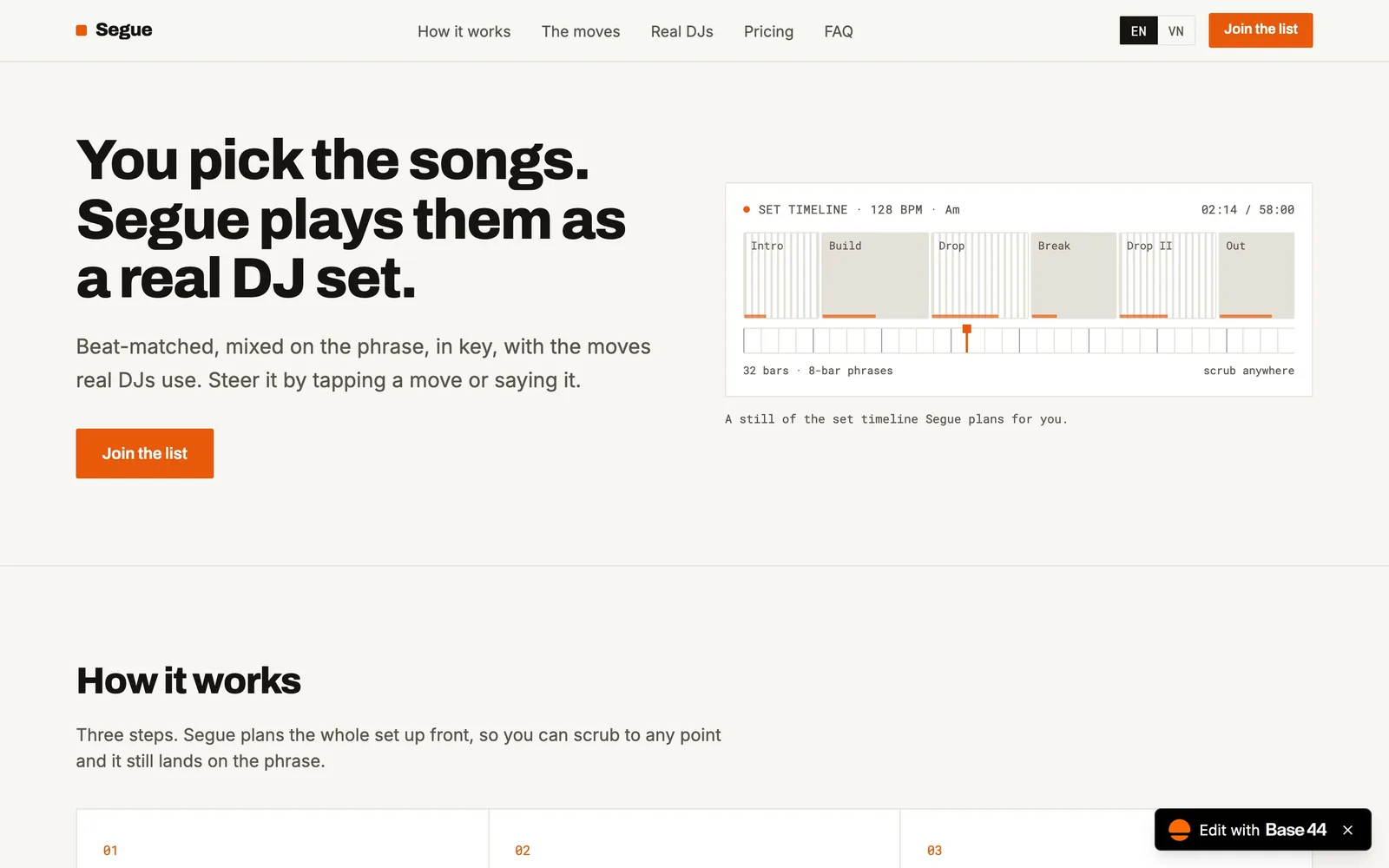
Segue by Nimit, built in one afternoon at Vibe-a-thon Saigon.
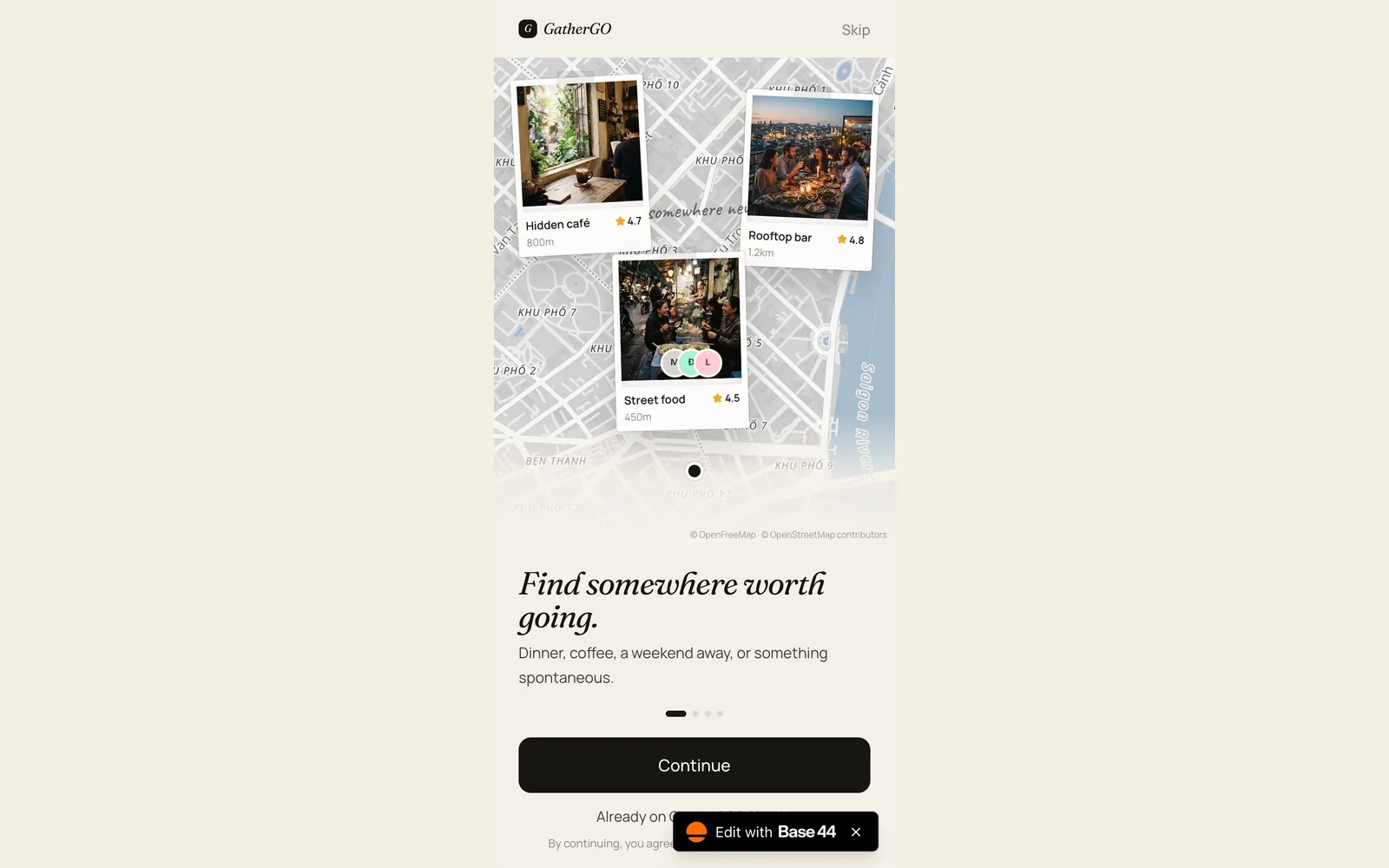
GatherGO by Thanh Huynh Dieu, built in one afternoon at Vibe-a-thon Saigon.
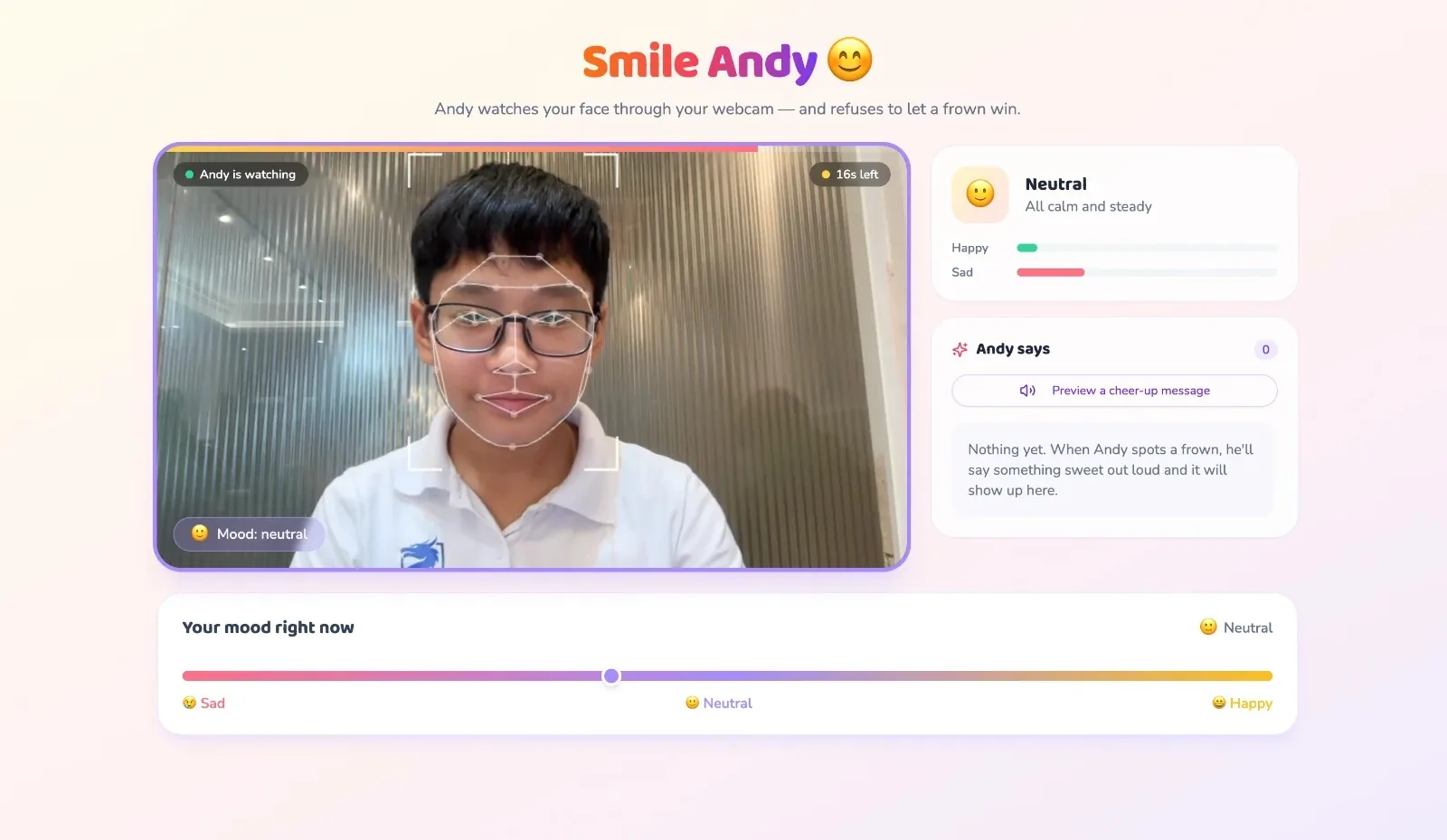
Smile Andy by Teddy Bui, built in one afternoon at Vibe-a-thon Saigon.
Winners took home 50 USD more in credits for the build tool they use, a domain name of their choice, a month as a Featured Launch on buildtolaunch and an hour of feedback from experienced builders. The full story is in the Vibe-a-thon Saigon recap.
FAQ
What is a builder community?
A builder community is a group of people who make things together, such as apps, tools or small products, and show their work to each other regularly. Unlike a club built around talks, the core activity is building: co-working sessions, build days and launches, with feedback from other members. On buildtolaunch, members build in project Spaces and post launches to a weekly board where likes count as votes.
What is a build day, and how do I host one?
A build day is a short event, often one afternoon, where everyone builds something and shows it at the end. To host one, pick a simple theme, choose one build tool, define "shipped" as a link someone else can open, and let participants vote on each other's launches instead of using judges. At Vibe-a-thon Saigon, people with no coding background went from idea to live app in one afternoon.
How do I find and join a builder community in Southeast Asia?
Start with online communities, then add your campus club and local events. Check whether members show recent work, whether it is free, and whether non-coders are welcome. In Vietnam, many events are posted on Luma and in Facebook groups, and the Events page on buildtolaunch lists upcoming ones.
How do I start a builder community at my university?
Start small. Talk to potential members about what they want to build, then invite a handful of founding members who share your values and have time. Run one simple activity, like a weekly co-working session, at least five times until people come back on their own. Then hand out roles such as event organizer, moderator and mentor so the community can grow beyond you.
How do I keep people building after the event ends?
Give every team a place to keep working, set a weekly deadline and book the next session before the first one ends. Send a recap with links to everything people made within two days. Track whether people return, not how many showed up once.
Luma or Facebook Events?
Luma is simple for registration: according to its help center, a host can require approval, set a capacity and enable a waitlist. Facebook reaches students who already live in group chats and pages. Many Vietnamese organizers post in both and point everything to one registration link. Details in Luma vs Facebook Events.