Run your own vibe-a-thon: a one-afternoon build day with no judges
· buildtolaunch
This guide is for student organizers, club leads and community builders who want to run a one-afternoon build event where people with no coding background ship working apps. It walks through the format used at Vibe-a-thon Saigon: tracks, one tool, a live-link rule, voting instead of judges, a schedule and a kit you can copy. Part of Build days and builder communities.
Short answer
A vibe-a-thon is a one-afternoon build event where participants use an AI app builder to make a working app and publish it as a link. To run one, choose three or four tracks that start from apps people already use, pick one tool, define "shipped" as a live link, give mentors a clear job, and let participants try each other's apps and vote instead of using judges. Five hours is enough.
What a vibe-a-thon is (and is not)
"Vibe coding" means describing what you want in plain language and letting AI write the code. A vibe-a-thon applies that to an event. It differs from a classic hackathon in four ways:
| Classic hackathon | Vibe-a-thon | |
|---|---|---|
| Length | 24 to 48 hours | One afternoon |
| Coding skill | Often needed | None needed |
| Output | Prototype, often a demo | A live link anyone can open |
| Winners | Judges | Participant voting |
The format comes from the idea in the Vibe-a-thon Saigon recap: start with something you already use, build what you wish existed, and leave with a link others can open.
What happened at Vibe-a-thon Saigon
The event was on Sunday 27 September 2026 at WORK X in Saigon, free with registration approval, and run with partners UpYouth, Base44, WORK X and Sáng Sao, with Julley Thai, Dung Hoang and Nessa as hosts. Everyone built with one tool, Base44, which provided build credits. There were four tracks: daily listening (music and podcast apps), learning a language (streaks and vocabulary drills), sharing with your closest people (small-circle photo and moment apps) and an open "build your own" track.
There were no judges. Builders posted their project as a launch on the buildtolaunch Launch League board, tried other builders' projects and voted. The event gave five awards: one winner per track and a special "most unhinged idea" award. Prizes were $50 in extra tool credits, a domain name, a month as a featured launch on buildtolaunch and an hour of feedback from experienced builders.
Step 1: choose tracks that start from real life
A blank prompt ("build anything") makes beginners freeze. A track gives them a starting point they already understand. Good tracks:
- start from an app people use daily, so they know what is missing
- are narrow enough to finish in three hours
- include one open track for people who arrive with their own idea
Write each track as one sentence plus an example. For instance: "Learning a language: make something that keeps you practising every day."
Step 2: pick one tool
One tool means one set of instructions and mentors who can help everyone. Choose an AI app builder where beginners can sign up with email and publish a link without setting up hosting. Before the event:
- Create an account and build one example app in 90 minutes, to know what is realistic.
- Check the free-plan limits for new accounts.
- Ask the tool's team whether they can provide build credits for participants. Explain the audience, the date and the number of people.
- Tell registered participants to sign up for the tool the day before.
If you cannot get credits, tell people exactly what the free plan covers so nobody is surprised mid-build.
Step 3: define "shipped"
Write this on the first slide: shipped means a link someone else can open. Not a screenshot, not a video, not a slide. The rule keeps the day honest and makes voting possible.
Step 4: set up voting instead of judging
A judging panel needs recruiting, a rubric and a conflict-of-interest check. Voting needs none of that:
- Each participant posts their project to a shared board with a title, a one-line description and the link.
- Everyone tries at least three other projects.
- Everyone votes. Close voting at a stated time.
- The top project in each track wins.
At Vibe-a-thon Saigon the Launch League board did this job. You can use any board that shows links and counts votes. One caution: decide ahead of time how to handle ties and how to stop people voting for their own project. If you want a more formal result, use a judging rubric instead.
Step 5: the five-hour schedule
This is our suggested schedule, not the exact run of show from Saigon:
| Time | Block |
|---|---|
| 0:00 to 0:30 | Arrival, Wi-Fi, sign in to the tool |
| 0:30 to 0:45 | Welcome, tracks, the shipped rule, voting rules |
| 0:45 to 1:00 | Choose a track, write a one-line goal |
| 1:00 to 3:30 | Build, with mentors on the floor |
| 3:30 to 3:45 | Hard stop: post your link |
| 3:45 to 4:30 | Try each other's projects and vote |
| 4:30 to 5:00 | Winners, thanks, next date, group photo |
Step 6: staff and room
- Host: keeps time and runs the welcome and the close.
- Two or three floor mentors: each knows the tool well and wears a visible sticker.
- Registration and sign-in: one person at the door.
- Photographer: optional, but get permission, especially if attendees may be minors.
Room checklist: power strips for every table, reliable Wi-Fi tested with a full crowd, a screen showing the countdown and the board, and snacks and water. Open registration with approval so you can balance majors and skill levels, and keep a waitlist (see how to host a student hackathon or build day for registration setup).
Step 7: after the day
Post a recap with every project link within 48 hours, using the event recap template. Invite people to a follow-up session. If participants want to keep building, they can continue in buildtolaunch project Spaces with an AI teammate and post updates to the weekly board. Track whether they come back, using the measures in community metrics that matter.
Where buildtolaunch can help
buildtolaunch is a free community for university students across Southeast Asia, open to any major, with no coding needed to start. Its Events page lists upcoming events, and the Launch League can serve as your voting board. If you want a themed version, see how to run a women's build day. You can create a free account to try the board before your event.
Read the full guide: Build days and builder communities.
Real builds from Vibe-a-thon Saigon
On Sunday 27 September 2026 (1:30 to 6:30 PM), at WORK X in Saigon, Vibe-a-thon attendees had one afternoon to turn an idea into a live app. No coding was required and there were no judges: everyone posted their project as a Launch, tried each other's apps and voted on the Launch League board. Each track had one winner, plus an award for the most unhinged idea.
| App | Builder | Track | What it does |
|---|---|---|---|
| Segue | Nimit | Daily listening | You pick the songs and a set shape; Segue plans the whole set and mixes it beat matched, in key, on the phrase |
| SayStrike | Bernie | Learning a language | Say each word right to land an attack on TED-REX, a monster that feeds on mispronounced past tense verbs |
| GatherGO | Thanh Huynh Dieu | Sharing with your closest people | Find spots worth going to, let the crew vote, then lock a plan with a time and the people coming |
| Smile Andy | Teddy Bui | Build your own | Reads your face through the webcam, offers to cheer you up out loud when you frown, and is built to save nothing |
| YellowMiso | Choi Byeongmin | Most unhinged idea | Look at your Mac and it unlocks, using the plain webcam and built to run on the device itself |
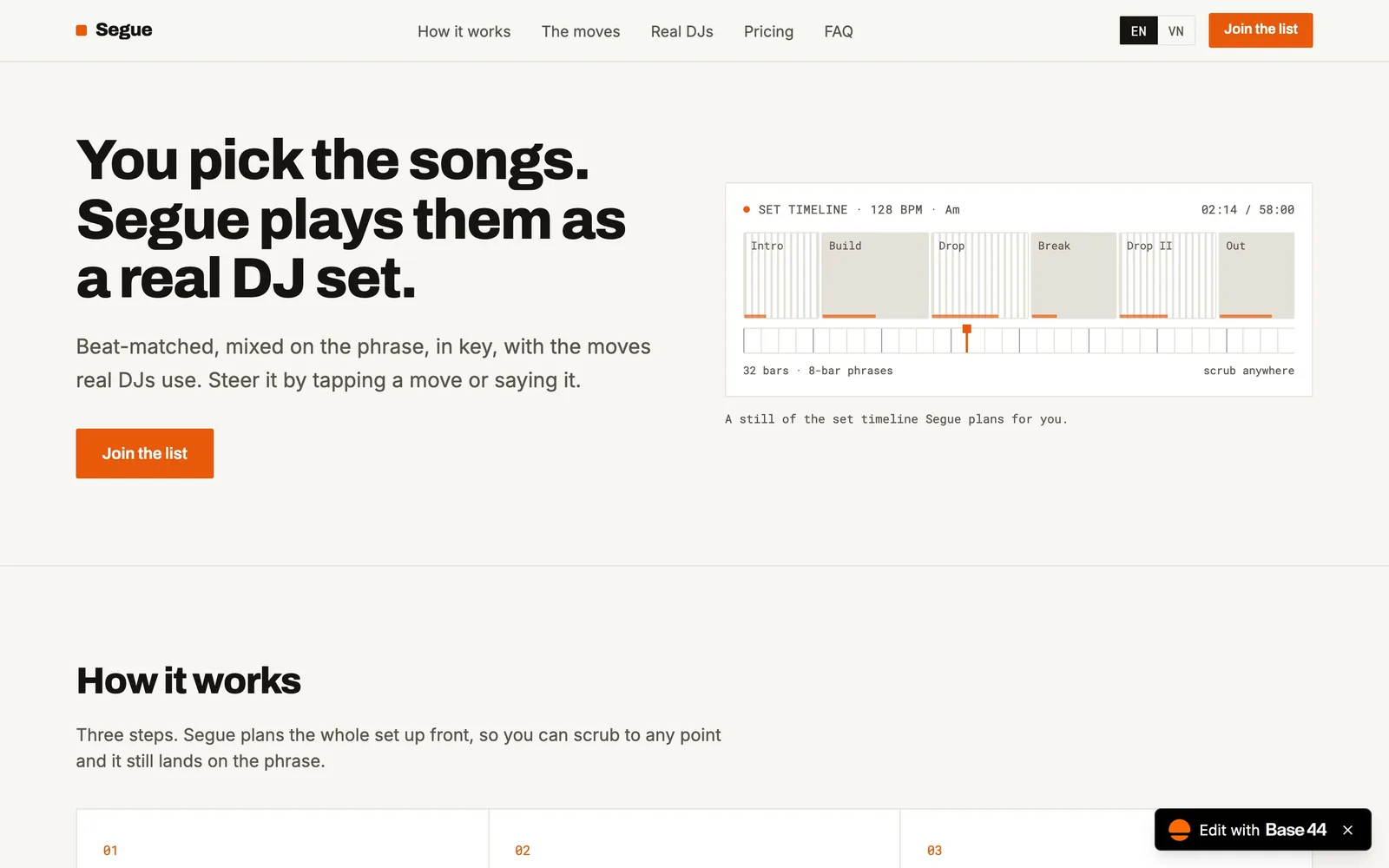
Segue by Nimit, built in one afternoon at Vibe-a-thon Saigon.
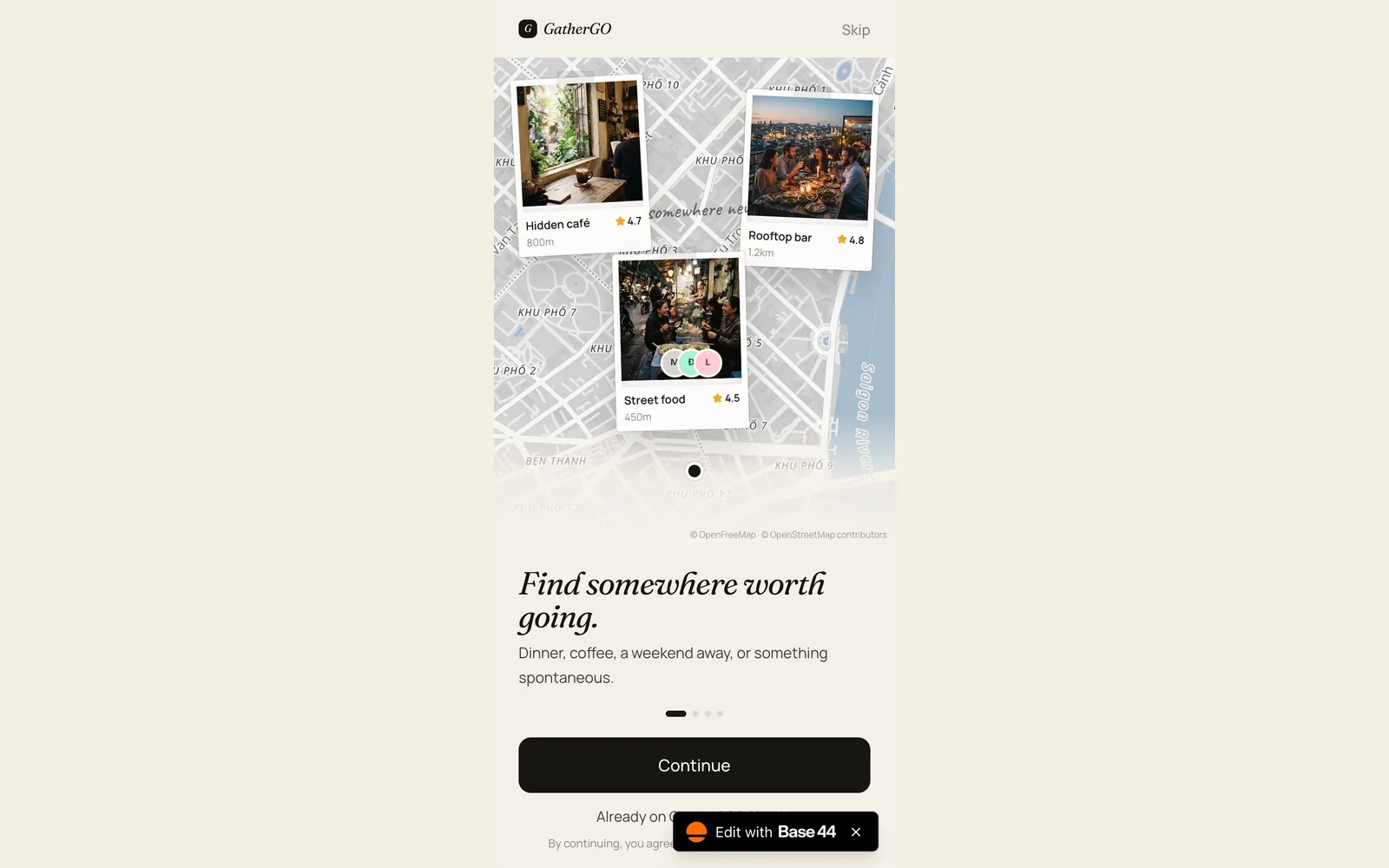
GatherGO by Thanh Huynh Dieu, built in one afternoon at Vibe-a-thon Saigon.
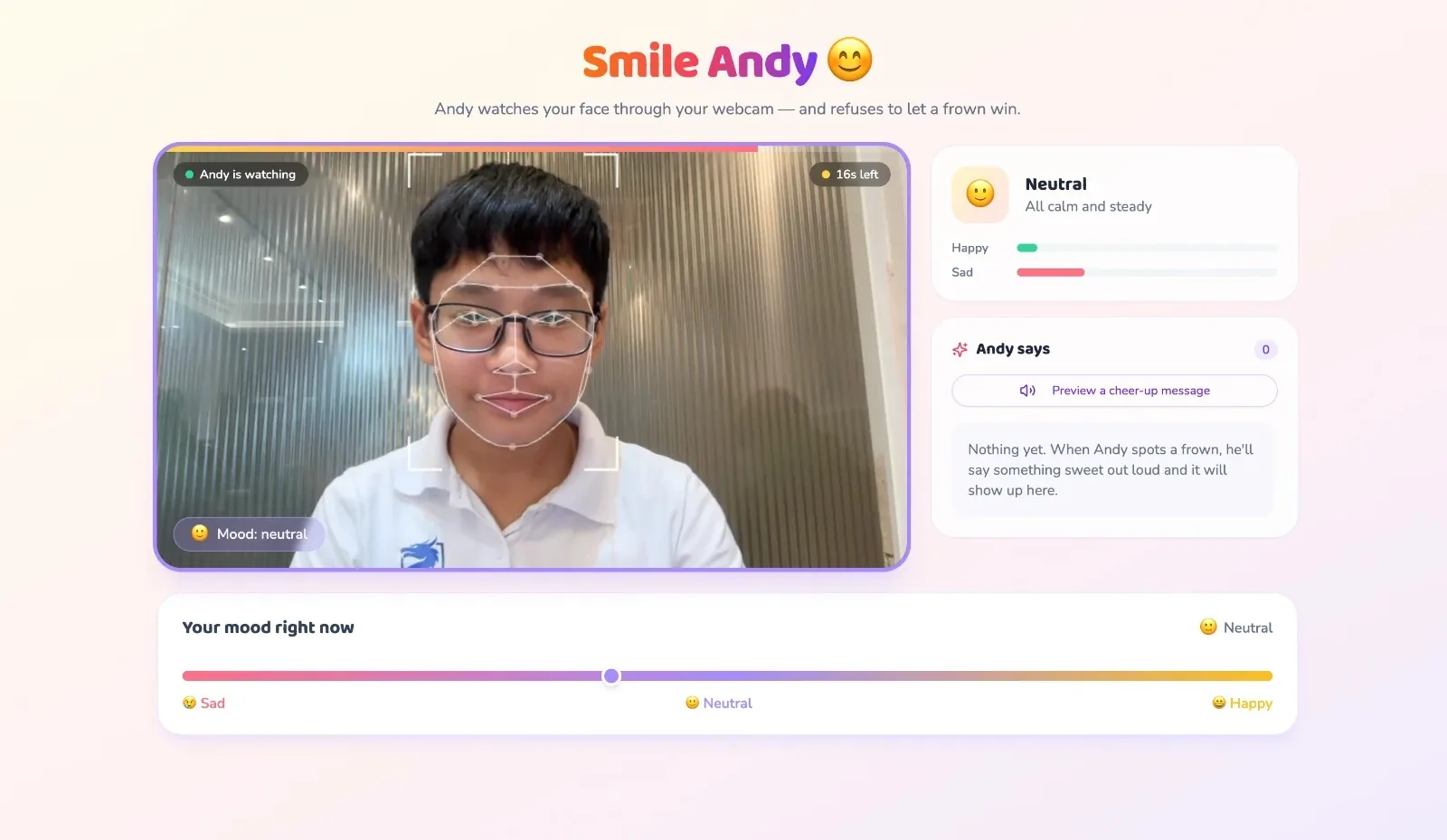
Smile Andy by Teddy Bui, built in one afternoon at Vibe-a-thon Saigon.
Winners took home 50 USD more in credits for the build tool they use, a domain name of their choice, a month as a Featured Launch on buildtolaunch and an hour of feedback from experienced builders. The full story is in the Vibe-a-thon Saigon recap.
FAQ
What is a vibe-a-thon?
A vibe-a-thon is a short build event, usually one afternoon, where participants describe an app in plain language and an AI tool builds it. Success means a live link anyone can open. It suits beginners because no coding is required and the day is short enough to finish.
How long should a vibe-a-thon be?
About five hours works well: roughly 30 minutes for arrival, 15 for the welcome, 2.5 hours of building, 45 minutes of testing and voting, and a short close. Shorter than four hours leaves too little build time. Longer than six wears out beginners.
Do I need judges?
No. Voting by participants works for a build day and makes everyone try other people's apps. Use judges only when you offer substantial prizes or need an authoritative ranking, and then publish a rubric.
Which tool should I use?
Pick one AI app builder that lets beginners sign up quickly, build without a local setup and publish a link. Test it yourself first and ask the tool's team about credits. Using one tool lets every mentor help every participant.
Can people with no coding background really finish something?
Yes. At Vibe-a-thon Saigon, people with no coding background shipped working apps in one afternoon. The keys are narrow tracks, a tool they can learn in minutes, mentors on the floor and a clear "link or it did not happen" rule.
How many people can I host?
It depends on your room, Wi-Fi and helpers. A good first event is 20 to 50 people with three to five helpers. Open registration with approval and a waitlist so you can adjust once you see who signs up.