What is a vibe-a-thon? Meaning, format and how it differs from a hackathon
· buildtolaunch
This guide is for students who have seen the word "vibe-a-thon" on a poster and want to know what it is, how it differs from a hackathon, and whether they can join without coding. You get a plain definition, a comparison table, real examples and a checklist for your first one. It is part of our full hackathon guide for students.
Short answer
A vibe-a-thon is a short build event, often a single day, where participants use AI tools to turn an idea into a working app by describing it in plain language, with no coding required. The name combines "vibe coding" and "hackathon". The goal is a live link someone else can open, not a polished startup.
What the word means
"Vibe coding" is a way of building software by prompting an AI model, testing the result and asking for changes. Martin Fowler's explainer says Andrej Karpathy coined the term in a February 2025 post on X, and notes that the style suits small, short-lived software.
"-a-thon" comes from hackathon, the familiar build-in-a-weekend contest. Put them together and you get an event where the build tool is an AI app builder and the main skill is describing a real problem clearly.
There is no official definition, so organizers use the name differently. Three real examples show the range:
- A day for founders. A full-day vibe-a-thon in Melbourne in April 2026 ran from 9:00 am to a 5:00 pm demo and networking session. The tool of the day was v0 by Vercel, and the page said no prior technical experience was required.
- A contest for non-coders. LegalTechTalk's Vibeathon, announced in May 2026, asked lawyers and other subject experts to build legal tech prototypes with natural-language prompts, solo or in teams, with a judging panel and three tracks.
- A student week. A vibe coding hackathon at ISM University in Vilnius is described by its organizers as "not a coding hackathon", open to students from any discipline, with free access to tools such as Bolt.new and Lovable.
Vibe-a-thon vs hackathon vs build day
| Traditional hackathon | Vibe-a-thon | Build day | |
|---|---|---|---|
| Typical length | 24 to 48 hours, sometimes weeks | A few hours to a few days | One day or afternoon |
| Coding needed | Often | No | No |
| Main tool | Any stack | AI app builder or prompt tool | Whatever people bring |
| Output | Prototype and pitch | A working app with a link | Progress on your own project |
| Judging | Usually a panel | Varies: panel, voting or none | Often none |
| Best for | Students with some technical skills | Beginners and non-coders | Anyone who wants to work beside others |
The labels overlap. An event can call itself a vibe-a-thon and still have a panel and prizes. Always read the event page. For the wider family of formats, see build days and builder communities.
Who can join a vibe-a-thon
Usually anyone, and that is the point. The reason these events exist is that AI tools lowered the barrier to building a working demo, so a business, law, design or education student can contribute as much as a computer science student. What decides who does well is not syntax. It is choosing a real problem, describing it clearly and testing the result with real users.
At buildtolaunch's Vibe-a-thon Saigon, people with no coding background shipped working apps in one afternoon. The recap tells the story and shows what people made.
How a vibe-a-thon day usually runs
Formats differ, but most follow the same arc:
- Start and rules. Organizers explain the theme or tracks, the tool and how the end of the day works.
- Pick a problem. You choose a real person with a real problem and write one sentence about them.
- Prompt and build. You describe the app, test it, fix what is wrong and repeat. Expect many small rounds.
- Get a link. Your app needs to run for someone other than you.
- Show and give feedback. Participants demo, try each other's apps and react. Depending on the event, this ends in judging, voting or just sharing.
How to prepare in 30 minutes
- Create an account for the tool the organizers name, and test it once.
- Bring a laptop and charger. A phone can work for trying other people's apps, but building is easier on a laptop.
- Write one problem you know well, such as how classmates find part-time work or how your club tracks sign-ups.
- Decide what "done" means: an app with a link you can send to someone and ask, "Can you do this in two minutes?"
If you want to practise first, buildtolaunch is a free community for students of any major. Its course library has 70+ free courses from Anthropic (Claude Academy), Google, Lovable, DeepLearning.AI, Hugging Face and Kaggle, and the practice tutor lets you rehearse skills with an AI. To follow along with local builder events, see our guide to vibe-a-thons and builder events in Ho Chi Minh City and the Events page.
Is AI allowed at a normal hackathon?
Often, but rules differ. Our guide can you use AI and vibe coding at a hackathon explains the three common policies and how to disclose your tools.
After the vibe-a-thon
The weak point of any event is the next day. Post what you built to the Launch League, a public board where members share launches and that resets every Monday, and keep going in a project Space with an AI teammate. Create a free account to start.
Real builds from Vibe-a-thon Saigon
On Sunday 27 September 2026 (1:30 to 6:30 PM), at WORK X in Saigon, Vibe-a-thon attendees had one afternoon to turn an idea into a live app. No coding was required and there were no judges: everyone posted their project as a Launch, tried each other's apps and voted on the Launch League board. Each track had one winner, plus an award for the most unhinged idea.
| App | Builder | Track | What it does |
|---|---|---|---|
| Segue | Nimit | Daily listening | You pick the songs and a set shape; Segue plans the whole set and mixes it beat matched, in key, on the phrase |
| SayStrike | Bernie | Learning a language | Say each word right to land an attack on TED-REX, a monster that feeds on mispronounced past tense verbs |
| GatherGO | Thanh Huynh Dieu | Sharing with your closest people | Find spots worth going to, let the crew vote, then lock a plan with a time and the people coming |
| Smile Andy | Teddy Bui | Build your own | Reads your face through the webcam, offers to cheer you up out loud when you frown, and is built to save nothing |
| YellowMiso | Choi Byeongmin | Most unhinged idea | Look at your Mac and it unlocks, using the plain webcam and built to run on the device itself |
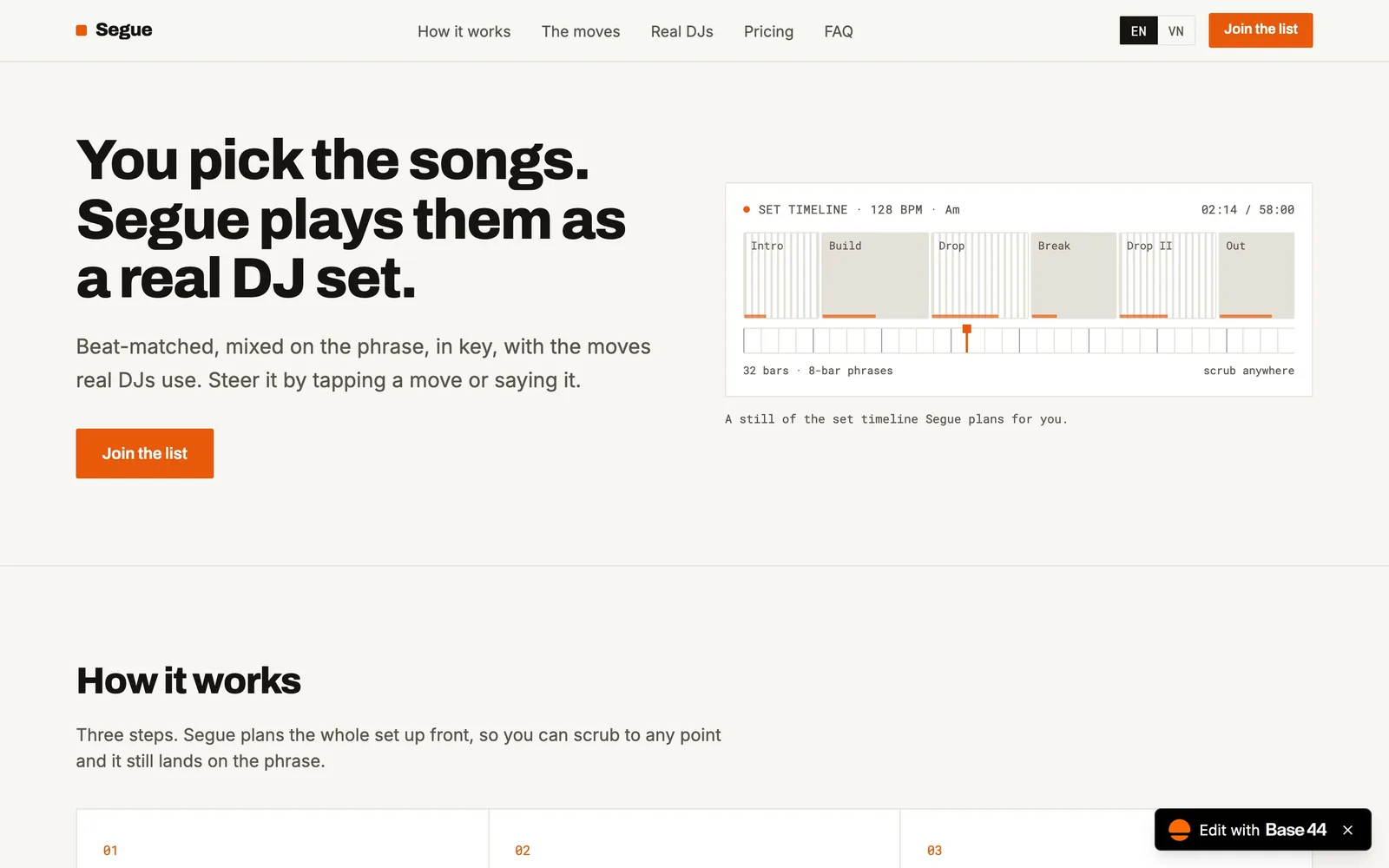
Segue by Nimit, built in one afternoon at Vibe-a-thon Saigon.
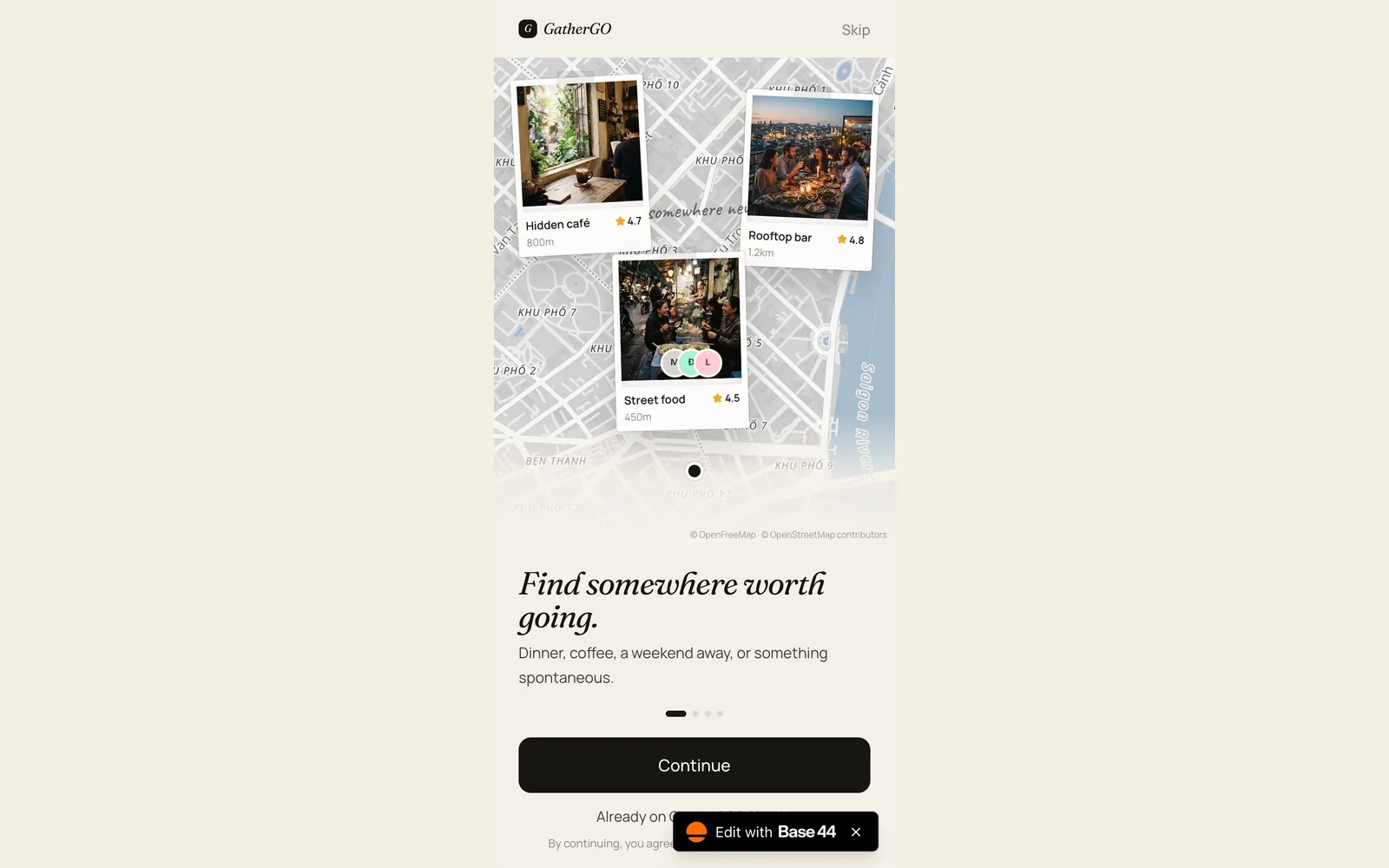
GatherGO by Thanh Huynh Dieu, built in one afternoon at Vibe-a-thon Saigon.
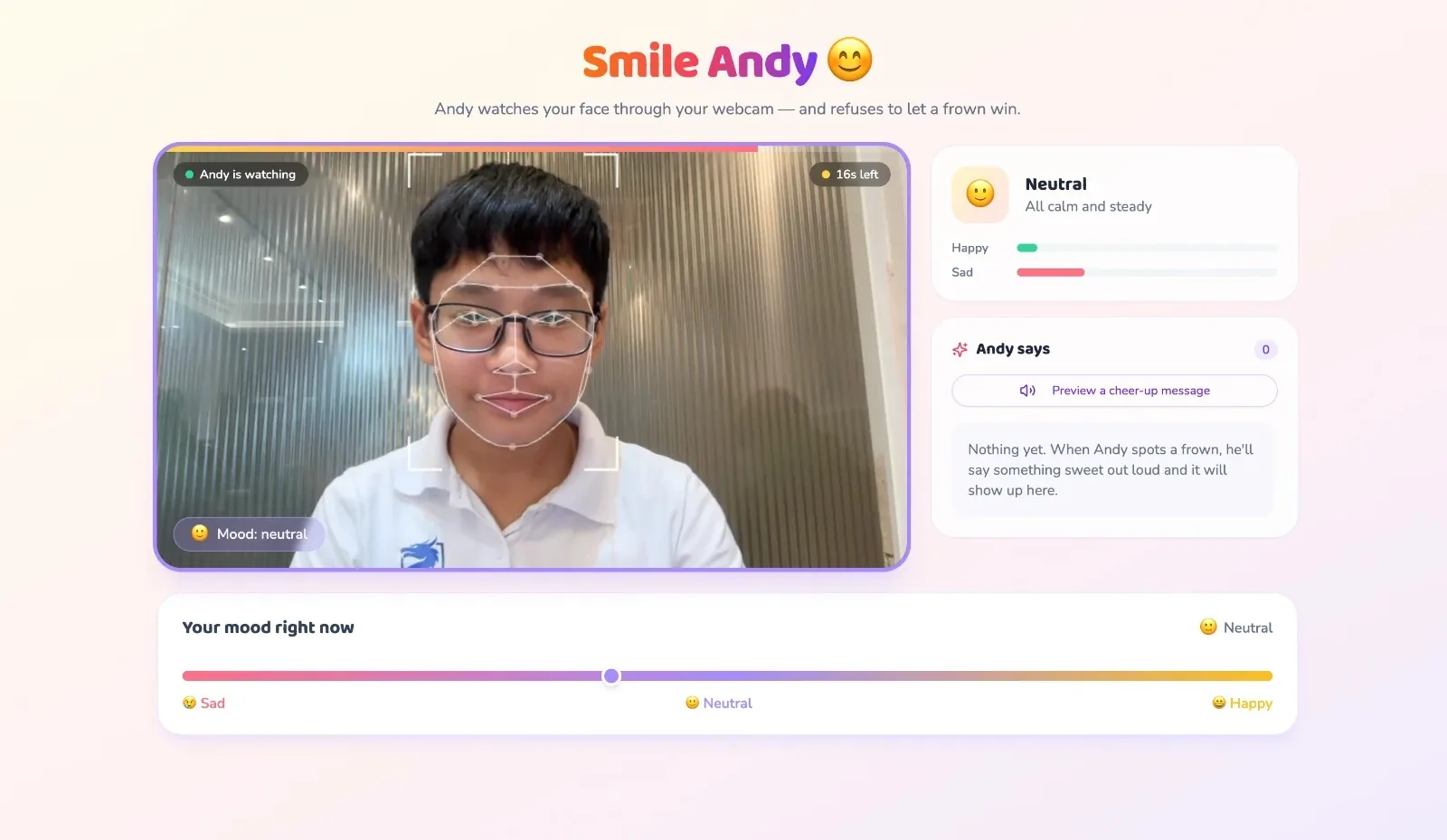
Smile Andy by Teddy Bui, built in one afternoon at Vibe-a-thon Saigon.
Winners took home 50 USD more in credits for the build tool they use, a domain name of their choice, a month as a Featured Launch on buildtolaunch and an hour of feedback from experienced builders. The full story is in the Vibe-a-thon Saigon recap.
FAQ
What does vibe-a-thon mean?
It is a mix of "vibe coding" and "hackathon". It names a short event, often one day, where people use AI tools to build working apps by describing them in plain language. There is no single official definition, so the exact format depends on the organizer.
Do I need to know how to code to join a vibe-a-thon?
Usually not. Many are designed for non-coders, such as the Vibeathon for lawyers and the Vilnius student event described above. At Vibe-a-thon Saigon, people with no coding background shipped working apps in one afternoon. Check each event page for tool and laptop requirements.
How is a vibe-a-thon different from a hackathon?
A hackathon often assumes coding skills and runs 24 to 48 hours or longer. A vibe-a-thon centres on AI app builders, is often shorter and welcomes beginners. Both end with something you show. Some events blur the line, so read the rules.
Is a vibe-a-thon free?
Some are, some are not. Vibe-a-thon formats range from community events to ticketed conference add-ons, like the LegalTechTalk Vibeathon that required a ticket. Check the event page for cost, approval rules and whether tool credits are provided.
What should I build at a vibe-a-thon?
Something small for a real person you can name, like a tracker, a booking page or a simple tool for your club. Aim for a working app with a link by the end of the event. A small thing that works beats a big idea that does not.
Can I keep working on my project afterwards?
Yes, and you should. Write down what you learned, show the app to five people who have the problem and post it on a public board such as the Launch League. For hackathon-style projects, our guide to what to do after a hackathon (in Vietnamese) has a 4-week plan.
Read the full guide: Hackathon for students, start to finish.